
Where to buy
Market price · Reverse Holofoil
$0.13
Price history
$0.13latest
Real recorded price history from daily Holofolio snapshots.
| Variant | Low | Market | High |
|---|---|---|---|
| Normal | $0.01 | $0.07 | $19.98 |
| Reverse Holofoil | $0.03 | $0.13 | $19.98 |
Other printings (12)
The same card printed in other sets.
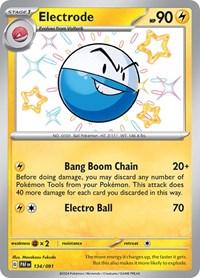
SV: Paldean Fates
#134/091 · Shiny Rare
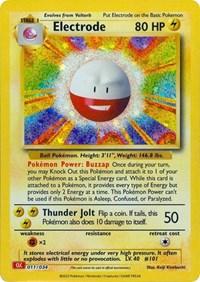
Trading Card Game Classic
#011/034 · Classic Collection
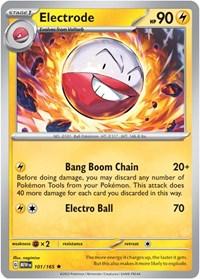
SV: Scarlet & Violet 151
#101/165 · Rare
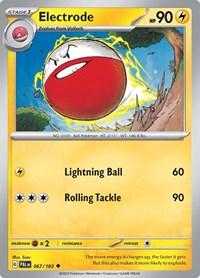
SV02: Paldea Evolved
#067/193 · Uncommon
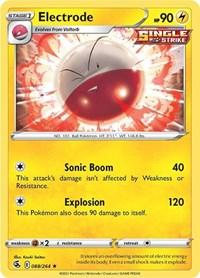
SWSH08: Fusion Strike
#088/264 · Rare
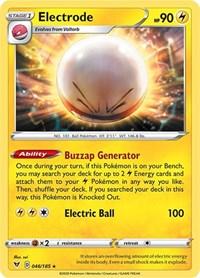
SWSH04: Vivid Voltage
#046/185 · Holo Rare
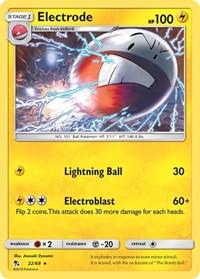
Hidden Fates
#22/68 · Rare
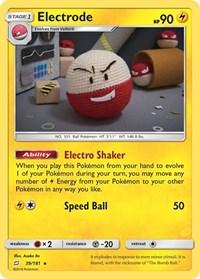
SM - Team Up
#39/181 · Holo Rare
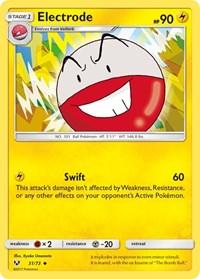
Shining Legends
#31/73 · Uncommon
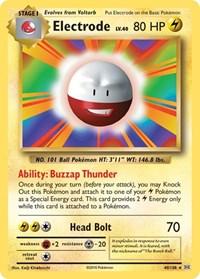
XY - Evolutions
#40/108 · Rare
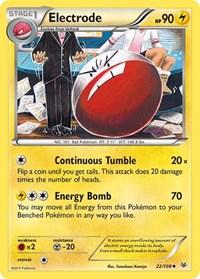
XY - Roaring Skies
#22/108 · Uncommon
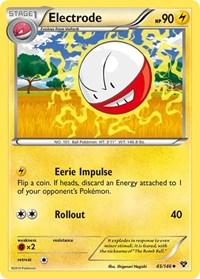
XY Base Set
#45/146 · Uncommon
Is it real? Pokémon authenticity tips
Most fake Pokémon cards give themselves away on the back, the texture, and a light test. Compare against a card you know is genuine from the same era whenever you can.
- Light (rosette) testHold the card up to a bright light. A genuine card is opaque — you should not see light pass through. Many fakes are printed on thinner stock and glow through.
- Back colour & blue layerReal cards have a specific blue swirl back and a thin black core layer visible on the edge. Fakes often have an off-blue, too-dark, or washed-out back, and no dark core line on the edge.
- Texture & holoOn holo/ultra-rare cards, feel for the textured foil and look at how the shine moves. Flat, mirror-like or grainy holo that doesn't match official patterns is a red flag.
- Font, spacing & colourCheck the energy symbols, HP font and set symbol against a reference image. Fakes frequently have slightly wrong fonts, fuzzy text, oversaturated colours, or a misplaced set symbol.
- Set symbol & copyrightConfirm the set symbol, card number and the copyright/date line match the real set the card is from. Mismatches (e.g. a modern card claiming a vintage set) are a giveaway.
Red flags
- Price that's far below market for a card this valuable.
- Seller has no grading photos, blurry images, or won't show the back.
- “Proxy”, “custom”, “oripa”, “orica”, or “not for resale” anywhere in the listing.
- Bulk lots of high-value cards from a brand-new or no-feedback seller.
These tips help spot common fakes but aren’t a guarantee. For expensive cards, buy from reputable sellers and consider professional grading/authentication.